Key Takeaways
Reasons to install residential window tint:
- Blocks up to 98% of solar heat
- Insulates in winter too
- Daytime privacy without losing your view
- Prevents fading of floors and furniture due to UV rays
- Protects your skin indoors
- Cuts glare so rooms to avoid discomfort
- Holds glass together when it breaks
What Is Residential Window Tinting?
If one room in your home always feels warmer than the rest or sunlight makes it difficult to watch TV or work on your laptop, your windows are likely the reason. Residential window tint is a thin film applied directly to the glass inside your home to help block heat, glare, and UV rays without blocking your view.
Think of it like sunscreen for your windows. It sits on the glass and filters what comes through, keeping your home cooler, more private, and more comfortable year-round. And unlike heavy curtains or blinds, it does all of this without making your space feel dark or closed off.
The technicians at Bravo Protection have installed home window tint across Minnesota for over two decades, and it always tends to surprise people how much of a difference it makes. If you are still on the fence, here are seven reasons that might change your mind.
7 Compelling Reasons to Install Residential Window Tint
Below are seven solid reasons why Minnesota homeowners who invest in residential window tint are glad they did:
1. Keeps Your Home Cool in Summer
On a hot Minnesota summer day, the sun does more than just brighten up your rooms. It pushes heat-producing solar radiation right through your windows, and once that radiation hits your furniture, floors, and walls, it gets absorbed and turns into trapped heat. It’s the same idea as a greenhouse or a parked car on a sunny day. Your air conditioner ends up running constantly just to fight that heat gain, and your electricity bill shows it.
Residential window tint is made specifically to block that solar radiation before it ever gets the chance to warm up your space. In fact, our high-quality residential window film can repel up to 98% of solar heat gain. That’s a massive difference in how comfortable your home feels and how hard your cooling system has to work.
2. Acts as Insulation, Even in Winter
Most people think of window tinting as a summer solution, but it earns its keep in Minnesota winters too. Windows are one of the weakest points of insulation in any home. Stand near an untreated window on a cold January night, and you’ll feel it immediately. Cold air creeps in faster than through a well-insulated wall, and the warm air from your furnace quietly escapes outside.
Window tint for the home adds an extra layer to your glass that helps hold warm air inside during winter and cool air inside during summer. It works both ways, which makes it a year-round comfort upgrade rather than just a seasonal one.
3. Offers Daytime Privacy Without Blocking Your View
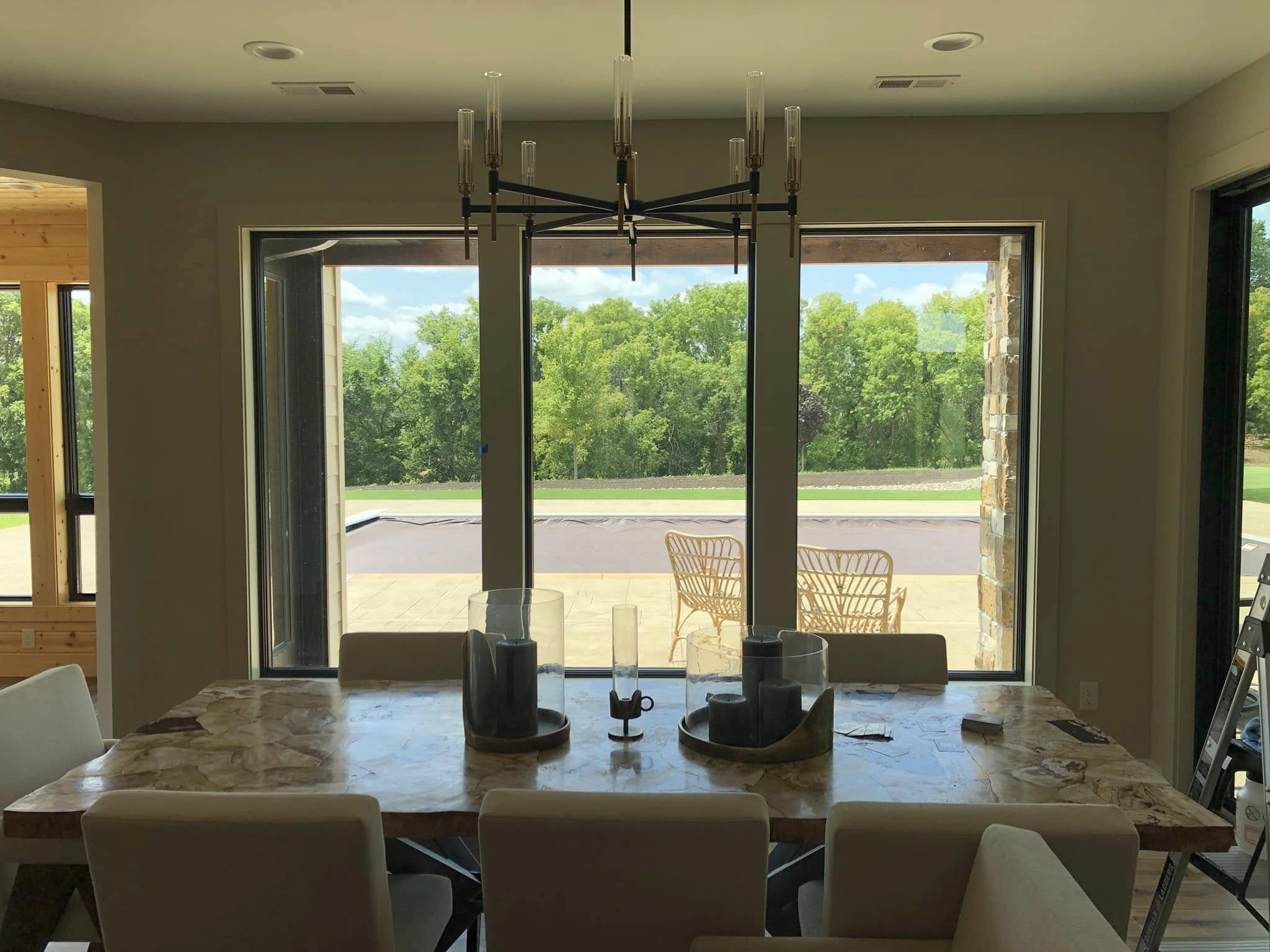
Large windows are beautiful, especially when you’re looking out at a lake or a tree-lined backyard. But those same windows work both ways. Anyone walking or driving past your home during the day can easily see inside.
House window tinting flips that dynamic. During daylight hours, you can see out clearly, but people outside can’t see in. It’s a simple, effective way to add privacy without giving up your view or covering your windows with heavy curtains.
One thing worth knowing is that some tint options offer less privacy after dark when your interior lights are on, so pairing them with blinds or outdoor lighting for nighttime use is a smart move.
4. Protects Your Furniture, Floors, and Belongings from Fading
UV rays are invisible to the naked eye but destructive. Over time, sunlight streaming through untreated windows fades hardwood floors, dulls upholstery, bleaches artwork, and ages rugs well before their time. And you won’t even notice it until the damage is already done.
A quality residential window film blocks over 99% of UV rays while still letting visible light into the room. Your home stays bright and natural-looking, but your belongings are no longer taking a daily beating from the sun. For homeowners who’ve invested in quality furniture or flooring, this protection alone can justify the cost of residential window tinting.
5. Protects Your Skin Too
As you might know, UV rays don’t just damage your furniture. They damage your skin as well, even when you’re sitting inside your own home. Prolonged UV exposure through windows can contribute to premature aging, lupus flare-ups, and, in serious cases, an increased risk of skin cancer.
Residential window tint acts as a shield between you and that UV exposure, so you can enjoy a sunny room without putting your skin at risk every day.
6. Reduces Glare So You Can Actually Enjoy Your Space
You picked out your couch, arranged your living room, and set up the perfect reading nook. But if the sun is blasting through your windows at the wrong angle, none of that matters.
Glare makes watching TV annoying, working on a laptop nearly impossible, and reading a book in a sunny room more of a chore than it should be. For some people, that constant harsh light even triggers headaches.
Residential window film takes the edge off without shutting the light out completely. Your rooms stay bright and welcoming, just without that harsh, uncomfortable intensity that makes you want to close the blinds entirely.
7. Adds a Layer of Security to Your Home
Most people don’t think about security when they think about window tint, but it’s one of the most practical residential window tint benefits. Standard window glass, when broken, shatters into sharp, dangerous pieces. Window film holds that glass together even after impact, making it significantly harder to break through quickly.
For a burglar, a window that doesn’t shatter on the first hit is a major deterrent. It buys time, creates noise, and draws attention. That alone can be enough to make someone move on. Beyond break-ins, this same quality protects your family during severe weather. Minnesota storms can send debris flying into windows, and a film that keeps the glass intact means less risk of injury inside your home.
Is Residential Window Tint Worth the Investment?
Yes, for most homeowners it absolutely is. The upfront cost of house window tinting varies depending on the number of windows, the type of film you choose, and the size of your home. But when you factor in lower energy bills, UV protection for your belongings, improved comfort, and added safety, the value adds up quickly.
We’ve worked with homeowners across Minnesota since 1978, and the feedback is consistently positive. People wish they had done it sooner. That said, the quality of the film and the installation matter a lot. A poorly installed film will bubble, peel, or discolor over time. That’s why choosing experienced professionals for your residential window tinting services makes a real difference.
Reflexiones finales
The bottom line is simple. Residential window tint makes your home more comfortable, more efficient, and better protected, without changing how it looks or feels from the inside. It’s a small change that makes a big difference, especially in a state like Minnesota, where every season brings its own challenges.
If any of this sounds like something your house could use, we are here to help. Reach out to Bravo Protection at (952) 476-7025, stop in at 14010 23rd Ave N, Plymouth, MN 55447, or just poke around www.bravoprotectionmn.com to see examples of our past work. We are open Monday through Friday, 8:30 AM to 5:30 PM, and always happy to answer questions.
Preguntas frecuentes
Most quality films last somewhere between 10 and 20 years, depending on what product you go with and how well it was put on in the first place.
Not really, no. A lot of films are made to cut heat and UV without dimming your rooms much at all. You would probably notice the temperature difference before you notice any change in brightness.
You technically can, but we would not really recommend it. DIY tint jobs tend to bubble or peel within the first year, and once that happens, there is not much you can do besides pull it off and start over.
The right film depends on your goals, your windows, and your home’s orientation. The best way to find out is to talk to an experienced professional. Bravo Protection offers consultations to help you find the right fit.