Key Takeaways
- 50% window tint blocks about half the light entering your car while keeping a clear, natural view.
- It offers a good middle ground between visibility and privacy, unlike darker tints.
- 50% tint visibility stays sharp during the day and is still workable at night with proper headlights.
- 50% window tint on car windows reduces heat, glare, and UV exposure without making the cabin feel closed in.
- Minnesota drivers should always check state tint laws before choosing a shade.
- Professional, XPEL-certified installation matters just as much as the tint percentage you pick.
Why 50% Window Tint Is a Popular Choice for Daily Drivers
If you are looking into automotive window tint for the first time, the sheer number of shade options can feel confusing. Should you go dark for maximum privacy, or stay lighter for a cleaner look? It’s a question we hear often at Bravo Protection, and for many daily drivers, 50% tint tends to offer the best balance. It’s not too dark or too light, and it works well for people who want comfort and style without sacrificing visibility.
In this post, we will break down what 50% window tint actually means, how it performs in daily driving and at night, and how to decide if it is the right choice for your vehicle.
What Does “50% Tint” Actually Mean?
Window tint percentage refers to Visible Light Transmission, or VLT. This is the amount of light that passes through the glass and film combined. A 50% window tint allows roughly half of the outside light into the cabin and blocks the other half. In simple terms, choosing 50% window tint means you are splitting the difference between a fully clear window and a heavily darkened one.
Benefits of 50% Window Tint
Choosing a mid-range tint like this brings a few clear advantages for everyday drivers, as outlined below:
- Balanced heat and glare reduction: A 50% window tint on car windows noticeably cuts down interior heat buildup during Minnesota summers and reduces glare from the sun or oncoming headlights.
- UV protection for your skin and interior: Quality automotive film blocks a significant portion of harmful UV rays, regardless of shade. This helps protect your dashboard, seats, and upholstery from fading and cracking over time, and it reduces sun exposure for you and your passengers on long drives.
- A natural, factory-like appearance: Many drivers like 50% tint because it looks clean and subtle rather than dramatically dark.
- Improved comfort without sacrificing visibility: Because it sits in the middle of the tint spectrum, this level keeps your view of mirrors, gauges, and the road clear both day and night.
A Minnesota Bonus: Less Snow Glare
Sun reflecting off fresh snow can be harsh on bright winter mornings. 50% tint takes the edge off that glare through the side windows while keeping the view clear, which many Minnesota drivers notice as much in January as in July.
50% Tint: How It Affects Day and Night Visibility
The next most asked question is how 50% tint visibility compares to going darker. Well, during the day, visibility with a 50% tint is very close to untinted glass. You will notice a slight dimming effect, but colors and details outside the car remain easy to see. This makes it a practical option for anyone who drives frequently in changing light conditions, including rush hour traffic or long highway stretches.
At night, things shift slightly. 50% tint at night does reduce the amount of ambient light entering the cabin. This is why some drivers notice mirrors and windows feel a little darker in low-light situations. However, because this shade is only cutting light transmission in half rather than blocking most of it, most drivers do not report meaningful visibility issues.
Is 50% Window Tint Legal in Minnesota?
It depends on the glass it goes on. Minnesota law measures the whole window, film and glass together. Side and rear windows must let through at least 50% of visible light, with a 3% tolerance, and reflect no more than 20%. Factory glass already blocks some light, so a 50% film on most windows reads below 50% once installed. That is why a slightly lighter film, such as 55%, is often the safer choice for windows that must meet the 50% rule. Ask your installer to meter the finished window.
| Window | Minnesota rule |
|---|---|
| Windshield | No film that reduces light or adds reflectivity |
| Front side windows, all vehicles | At least 50% light through film and glass combined (plus or minus 3%) |
| Back side and rear windows on cars (sedans, coupes) | Same 50% rule as the front side windows |
| Back side and rear windows on SUVs, trucks and vans | Can go darker than 50%, as long as the vehicle has dual side mirrors |
| Any window | No mirrored look; reflectance no more than 20% (plus or minus 3%) |
| Medical exemption | Darker tint allowed with a qualifying prescription or physician’s statement |
Film installed on a vehicle window must also carry a permanent marking showing its light transmittance and reflectance. This is a summary, not legal advice. See Minn. Stat. 169.71 for the full rules.
How 50% Compares to Darker Tints
| Tinte | Look | Privacidad | Where it is legal in Minnesota |
|---|---|---|---|
| 70% or clear ceramic | Nearly clear | Bajo | Side and rear windows (not the windshield) |
| 50% | Light | Moderado | Side and rear windows, if the combined reading stays at 50% or higher |
| 35% | Medio | Bien | Back side and rear windows of SUVs, trucks and vans only |
| 20% | Dark | Alto | Back side and rear windows of SUVs, trucks and vans only |
| 5% | Limo | Muy alto | Back side and rear windows of SUVs, trucks and vans only |
Shade is only part of the picture. Heat rejection depends more on the type of film than on how dark it is, so a light ceramic film can keep a car cooler than a darker dyed film. See ceramic vs. regular tint and 35% vs. 20% tint.
How to Choose the Right Tint for Your Vehicle
To choose the right tint, consider a few important factors beyond just picking a percentage:
- Your climate and parking situation. If your car remains outside for long hours, heat and UV protection are more important than looks.
- How much privacy you want. 50% offers moderate privacy. If you want more, a darker shade on rear windows paired with a lighter front tint is common.
- Your vehicle type. SUVs and trucks sometimes allow darker rear tints than sedans under state law.
- Film quality. Ceramic and other premium films block more heat and UV than basic dyed films.
- Installation quality. Inexperienced installation can lead to bubbling, peeling, or uneven edges.
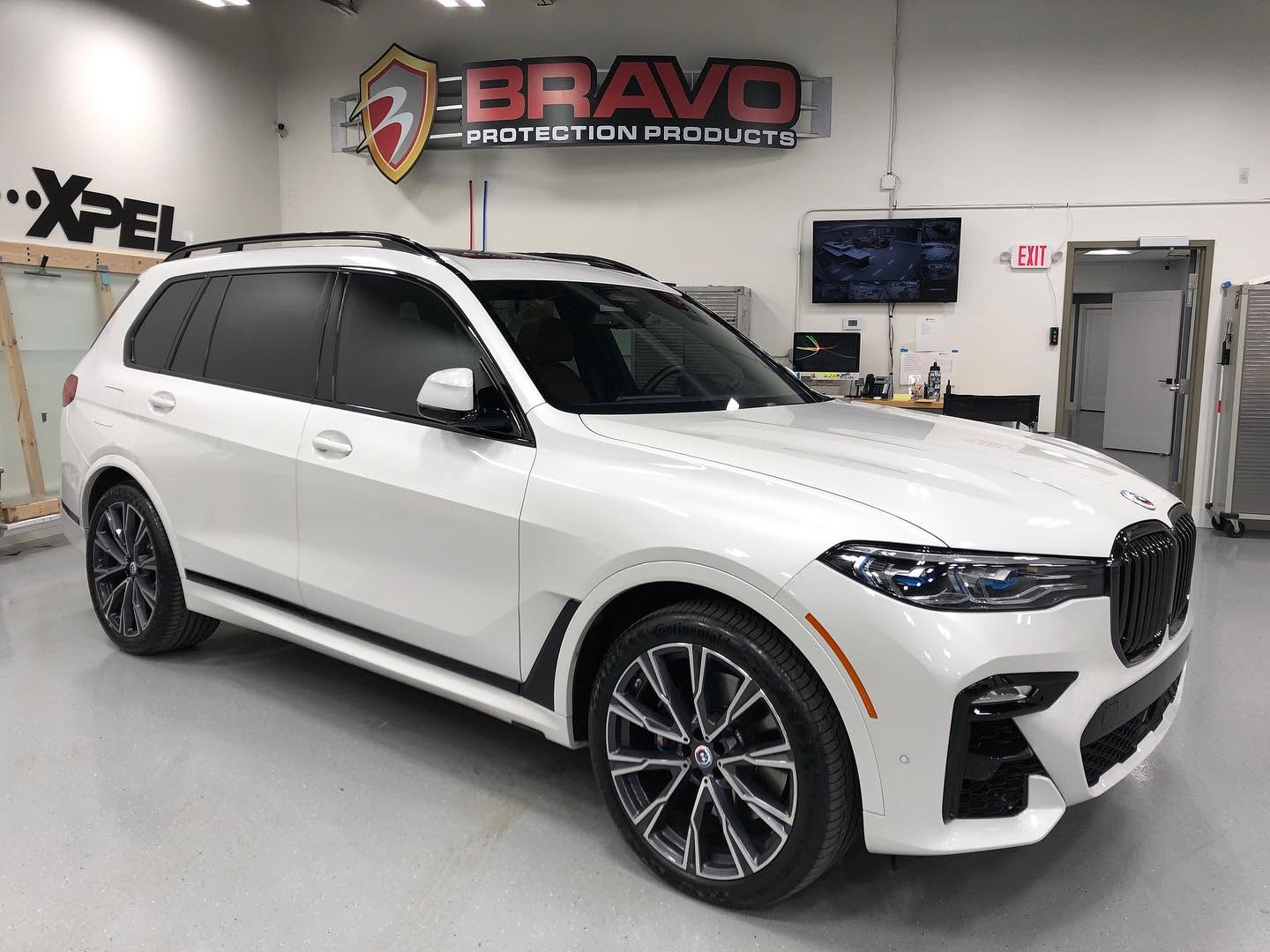
At Bravo Protection, the process starts with a consultation to understand your driving habits and goals, followed by a precise, template-based installation and a final walkthrough before the vehicle leaves the shop. That kind of structured process, backed by XPEL-certified training, is why our shop maintains a 4.9 Google rating across hundreds of reviews from Twin Cities drivers.
Achieve The Right Balance With 50% Window Tint
If you want help with heat and UV rays but still want clear visibility through the windows, 50% window tint can be a good option. It lets in plenty of light during the day, while most drivers find it easy enough to use at night too. It can work well on different types of vehicles, but the film you choose matters.
Since 1978, Bravo Protection has helped car owners in the Twin Cities choose and install window tint suited to their vehicles and driving needs. The team also understands Minnesota’s tint rules, helping you avoid choosing a film that could cause problems later.
If you are weighing your options and want a second opinion on what shade fits your car and daily routine, the team at Bravo Protection is happy to walk you through it. Reach out to us at:
Address: 14010 23rd Ave N, Plymouth, MN 55447, United States
Phone: +1 952-476-7025
Email: sales@bravoprotection.com
Preguntas frecuentes
Yes, it noticeably reduces interior heat buildup compared to no tint at all, though it will not cut heat as dramatically as a much darker film.
Generally yes. Visibility through mirrors and windows stays close to normal during the day, with only a slight dimming effect at night.
It offers moderate privacy. If you want more coverage, many drivers pair a lighter front tint with a darker shade on rear windows, where laws allow it.
Most vehicles can be completed in a couple of hours, though timing depends on the number of windows and the vehicle type.
Not always. The law measures film and glass together, and side and rear windows must let through at least 50% of light, plus or minus 3%. A 50% film on factory glass usually reads lower, so a slightly lighter film is often the safer choice. Ask your installer to meter the window.
On an SUV, truck or van, yes, darker rear tint is allowed as long as the vehicle has dual side mirrors. On a sedan or coupe, the rear window follows the same 50% rule as the side windows unless you have a qualifying medical exemption.
For most drivers, yes. 50% is one of the lighter shades, so night visibility stays close to normal, which is why many drivers who do a lot of night or rural driving prefer it.
Quality film installed by a professional lasts many years. Ceramic and carbon films resist fading better than dyed films. Coverage depends on the film, so ask for the written warranty terms.